
One IO, One Invoice. The “Impossible Dream”?
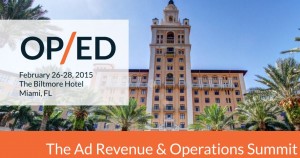
Heading back to Washington, DC’s snow, ice, and “wintry mixes” was not quite as stimulating as spending time networking and learning at Operative‘s second annual Ad Revenue and Operations Summit, aka “OP/ED” that attracted about 100 executive last week in Miami, FL. The invitation-only conference was held for Operative’s clients and partners to share best practices, insights and help set the agenda for 2015 and beyond.
Lorne Brown, Operative’s President/CEO and Founder will be speaking on BIA/Kelsey’s Programmatic Superforum at the NATIONAL show in Dallas, which is March 25-27. Among other things, Operative and BIA/Kelsey will be releasing a jointly developed local publisher cut of Operative’s publisher survey previewed at OP/ED that analyzed profitability practices and parameters. Brown will highlight this study at our conference and also speak to what’s on his mind for programmatic and ad work flow from the perspective of publishers.
At the top of the wish list at OP/ED was the goal of publishers being able to provide “One IO, One Invoice.” This ideal of having sellers prepare a single Insertion Order (IO) for an advertising package that includes multiple channels and offers and both have it fulfilled in an automated workflow….and have the client receive a single, integrated invoice listing out all the inventory purchased and billed remains a bit pie in the sky. But clearly this is a serious and committed vision that companies like Operative are building out.
There are so many pieces to this puzzle, it’s hard to know which thread to start pulling on. Operative’s strategy and really the industry’s, is to continue focus on building out its core platforms but to enable that One IO, One Invoice for its clients by adopting an API Stack Strategy to support interoperable database applications. There’s no other way to do it, so this is smart and extremely helpful for both publishers and clients. Operative clients including Comcast Spotlight, Hulu, NBC Universal, Verizon and Univision shared excellent and helpful insights and best practices based on their particular approaches to the sales process.
Digging deeper in to the topics, Digital Content Next’s CEO Jason Kint kicked thing off in his keynote by highlighting other areas of urgent concern, namely: Viewability, Fraud, Programmatic, Declining CPMs, dealing with the shift to mobile and better tools and information flows to support campaign optimization and revenue yield management. Compared to dealing with winter in Boston… a piece of cake!
Really one of the burning issues was dealing with viewability and fraud. In the wrap-up session, Kelly Blue Book’s Mark Bernstein; Gawker’s John Price and Eric Harris from BuzzFeed detailed out their vision for what needs to happen with viewability. In their view, supporting viewability and the “vCPM” (viewable CPM) metric requires a three-phased approach. The goal is for systems like Operative’s need to support automated delivery reconciliation and delivery, reporting and yield management. Phase 1 is to lay the groundwork to sell, execute and invoice viewable orders. Phase 2 is to automate delivery, billing reconciliation and invoicing. Finally, Phase 3 is to support viewable reporting, forecasting and payments.
For those interested, there’s a fairly rich Twitter stream at #OpED15, check it out.
